The rich Cuban Individuals prepared and ready for Havana to fall
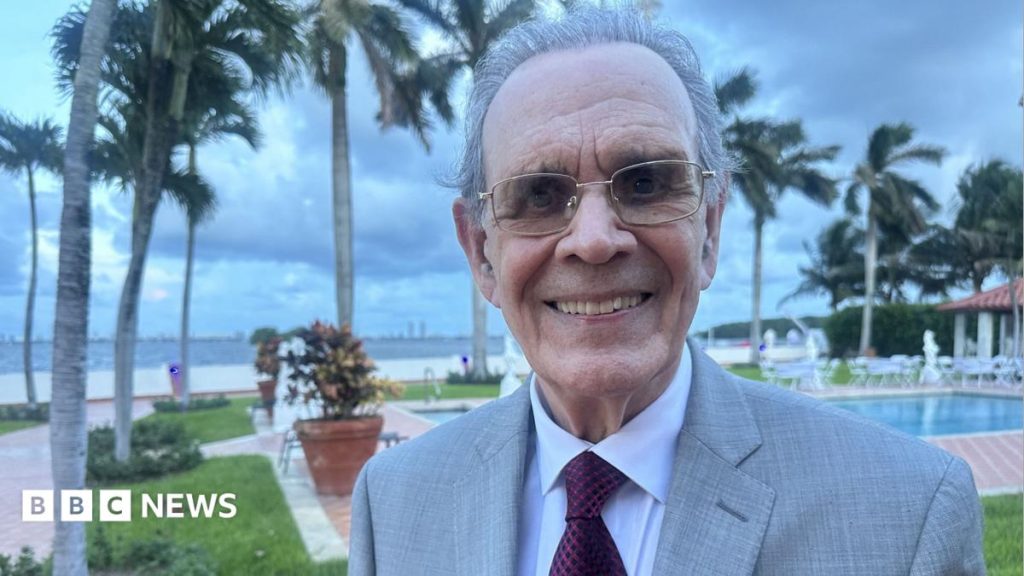
The Cuban authorities has not commented on the CANCC itself. However historically such teams immediate indignation amongst revolutionaries who insist they won’t be pressured out by their critics in Miami.
I ask some visitors if they will recognize the irony that the identical individuals who help a serious supply of the island’s distress – the decades-long US financial embargo and the present gasoline blockade – are actually hatching plans for its reconstruction, with out the enter of most Cubans.
For Cuban-American agricultural knowledgeable Hugo Orizondo it is just sensible to attract up a highway map to Cuban growth. “Proper now, Cuba is sort of a black gap, we do not know what is occurring over there,” he admits. “However we do know the potential [for investment].”
Orizondo says he understands the reticence amongst Cubans to see overseas traders shopping for up one thing as delicate because the rights to arable land. “However what are they going to do with it?” he retorts. “When traders come, they convey cash and expertise into the land.”
Each are urgently wanted, he says, if Cuba is ever to provide sufficient to feed its personal inhabitants and break its reliance on meals imports.
Land titles lie on the coronary heart of any reconstruction undertaking put ahead by this era of rich Cuban Individuals. Juan Omar Sixto says his father misplaced 5 properties and a farm in Cuba’s Pinar del Rio province to the revolution. Whereas he insists he has no intention of eradicating any household dwelling in these houses, he does need compensation for the nationalised land.
“I labored on that farm for 5 years of my life with my father, and so they took it away. I would like restitution or compensation. Even when they provide me only a penny on the greenback, I will take it.”
“It is ethical justice,” he argues.
The Cuban authorities portrays such historic title claims as bitterness by a corrupt landed gentry who made fortunes on the backs of indentured staff and slaves. Each slavery and the system of indentured staff did not finish in Cuba till the late nineteenth Century.
The federal government additionally argues that the exiles might by no means stand that Castro handed land reforms which handed over their fields to the employees and the state.
“Most of our sugar mills have been dismantled, however we are going to recuperate these lands and put them into manufacturing,” says Nicolás Gutiérrez, the president of the Nationwide Affiliation of Sugar Mill Homeowners of Cuba, an exile organisation championing the title claims.
“I am not promising will probably be in sugar,” he says.
“It may be in ethanol, co-generation, photo voltaic panels or water purification cells. Who is aware of? There are a whole lot of completely different choices,” he remarks. “We have to get them producing, we have to have an actual wage paid to Cuban staff and create a multiplier financial impact throughout the island.”
 Summarize this article with: