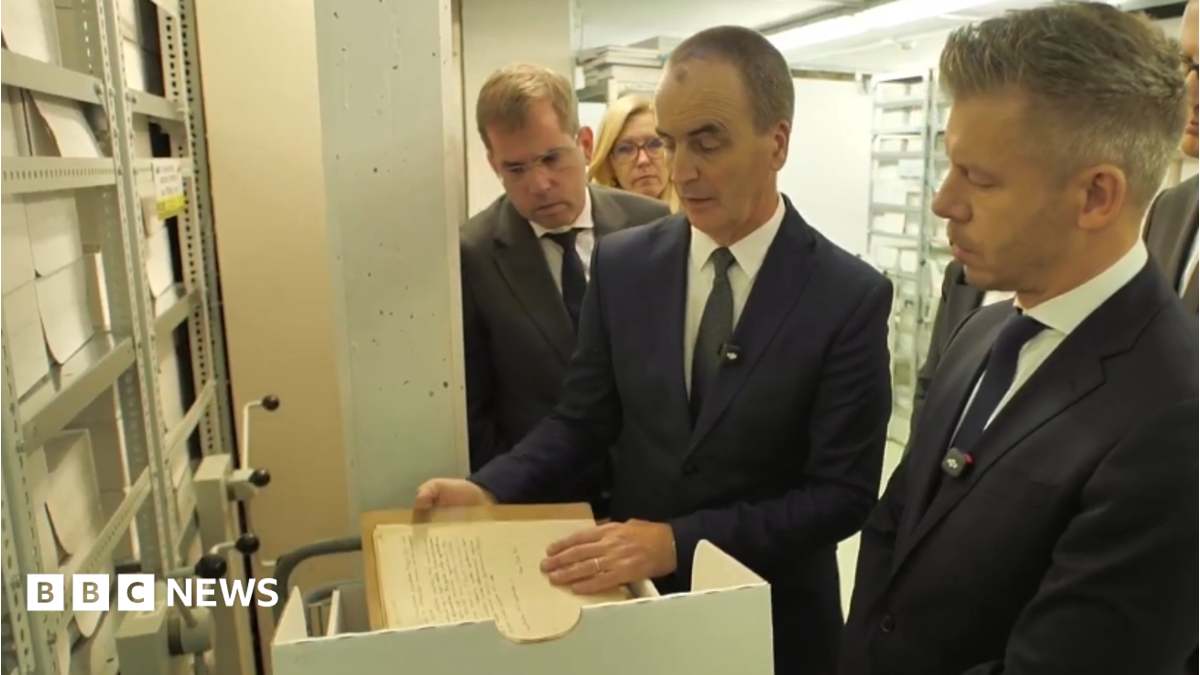
A typical entry information the actual identify of the informer, their codename, date of delivery, tackle and mom’s identify, their motive for recruitment – whether or not voluntary or as a result of they have been blackmailed or coerced – and the identify of their dealing with officer.
One other batch of information, often called the “B-dossiers” are at present being digitalised, and can be made out there on 25 February.
These will supply way more element concerning the recruitment course of, and the excessive or low worth of the data they offered.
Critics of the opening of the information emphasise this level – that individuals can be too fast to guage these they discover within the information, and unwilling to know the nuances.
Round 150-160,000 individuals are estimated to have been recruited as informers between December 1944 and February 1990 in Hungary.
Many have been blackmailed, with threats together with lack of work or research alternatives, lack of entry to medicines, or the leaking of details about their intercourse lives or addictions. Such intimate particulars can be fastidiously edited out of the present disclosures too.
Krisztian Ungváry, a historian who has lengthy campaigned for the complete launch of the information, says entry to info on what’s recorded by the state in opposition to the citizen is a residents’ proper, and shouldn’t depend upon the whims of these in energy.
“Within the overwhelming majority of surviving agent stories, it is not even attainable to determine the agent, not to mention their motives,” counters an opponent of at the moment’s transfer, Zsuzsanna Borvendég, a historian and MEP of the far-right Our Homeland social gathering.
Publishing the names of informers with out totally explaining the circumstances of their recruitment and their actions dangers deceptive the general public, she informed Hungarian media.