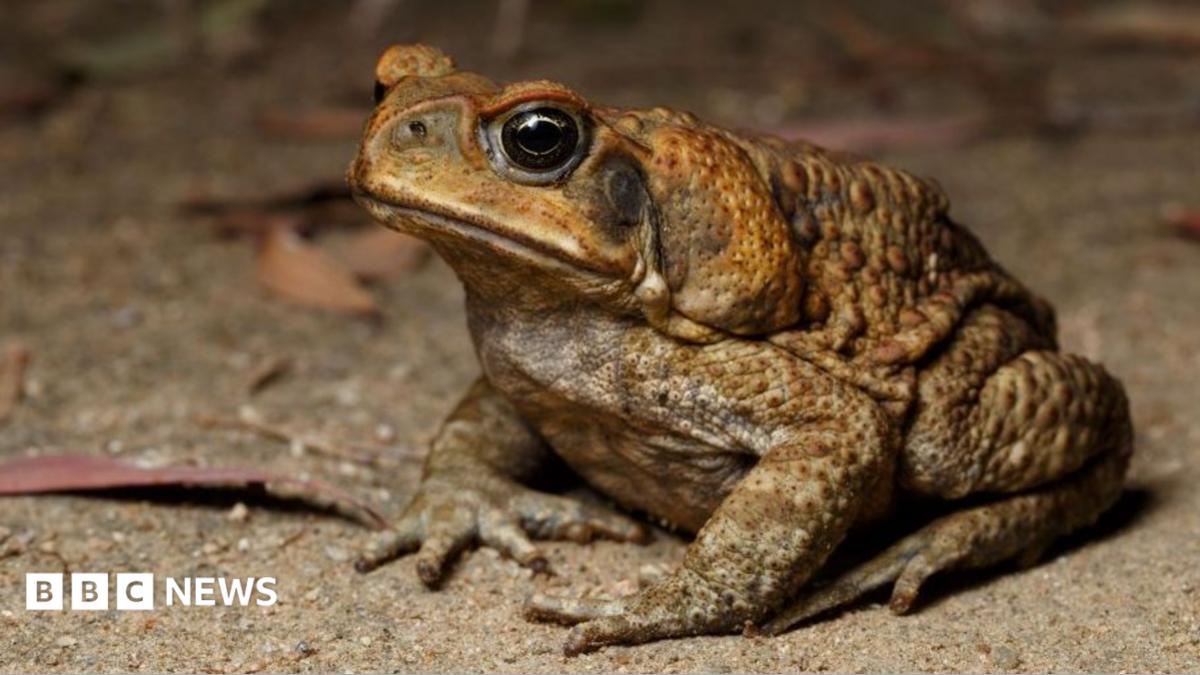
Rio Tinto is ploughing thousands and thousands of {dollars} into stopping the toxic cane toad reaching the Pilbara area of western Australia, the place the mining big has an unlimited iron ore operation.
The agency, alongside Curtin College in Perth and others, will spend A$28m (£14.5m) constructing a “toad containment zone” to forestall the pest travelling south.
Whereas the cane toad shouldn’t be a direct risk to Rio Tinto’s enterprise, it produces toxins deadly to native wildlife and poses a risk to Pilbara’s ecosystem.
Rio Tinto has beforehand confronted criticism for destroying two sacred Aboriginal rock shelters in Pilbara which sat above tonnes of iron ore.
The choice value the previous chief govt his job, provoked a widespread backlash and noticed Rio Tinto decide to rebuilding belief with Indigenous communities.
Commenting on the proposed containment zone, Roberta Hunter, a ranger in Australia’s Nyangumarta Warrarn Indigenous Protected Space, mentioned: “Cane toads destroy the water and animals.
“When toads come near our nation, we wish to be there to cease them as a result of we do not need the nation to be destroyed.”
The plan is to chop off the toad’s water provide by constructing a barrier throughout 7,500 sq km (2,895 sq m) of land between the Nice Sandy Desert and the Indian Ocean.
In drier months, the cane toad wants water each few days to outlive.
If there aren’t any pure water sources, the toad depends on synthetic water factors usually used for cattle and irrigation.
The funding can be used to cease the toad accessing dams, storage tanks or different ground-level water sources. The five-year mission will start in 2027.
Numerous native species are in danger if the toad will get into Pilbara. These embrace the northern quoll, whose numbers have been lowering, the goanna lizard and the ghost bat.
The toads had been launched into Australia in 1935 to regulate beetles throughout the sugar cane trade.